A Korean Creative Musical Bridging History, Science, and Imagination
After months of anticipation, I finally had the chance to watch the world premiere of EMK’s 10th original musical, The Man in Hanbok — and it was absolutely worth the wait.
Centered around Jang Yeong-sil, the brilliant scientist of the Joseon Dynasty, this Korean musical boldly travels across Joseon-era Korea, Renaissance Europe, and the present day.
With actors performing dual roles across timelines, the story unfolds as a rich, layered theatrical experience that feels both intellectual and deeply emotional.
What made this performance even more special was seeing top-tier Korean musical actors share the same stage.
I attended the show with the Park Eun-tae × Kai cast combination — a pairing that alone set expectations incredibly high.
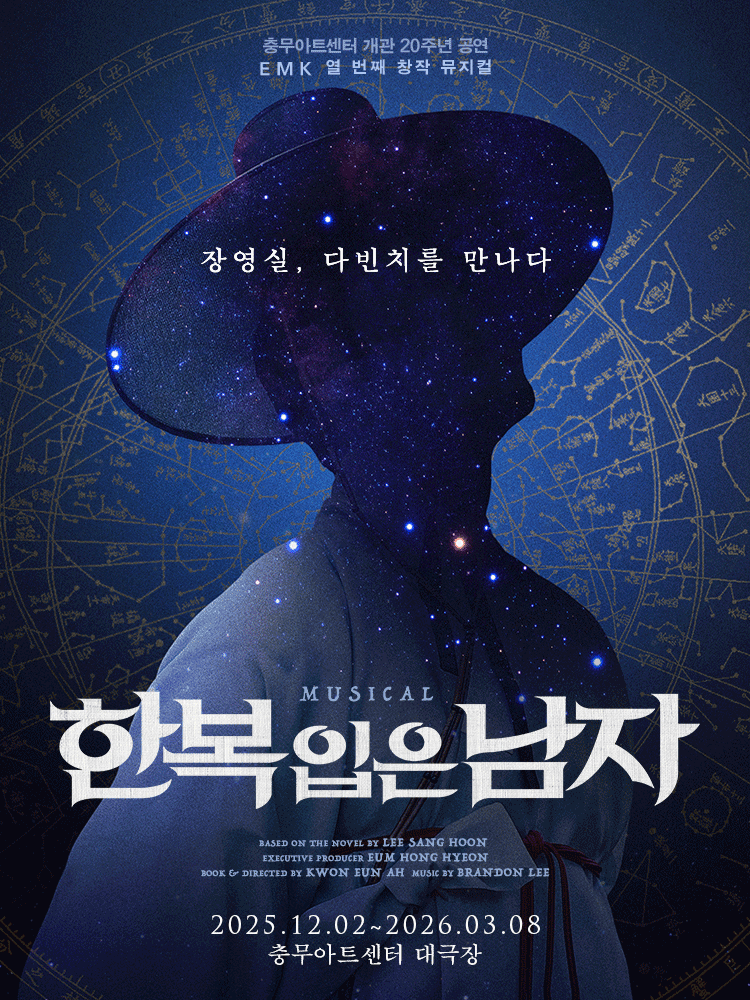
NOL 티켓
tickets.interpark.com
📌 Performance Information
- Date: December 11, 2025
- Venue: Chungmu Art Center – Grand Theater, Seoul
- Runtime: 180 minutes
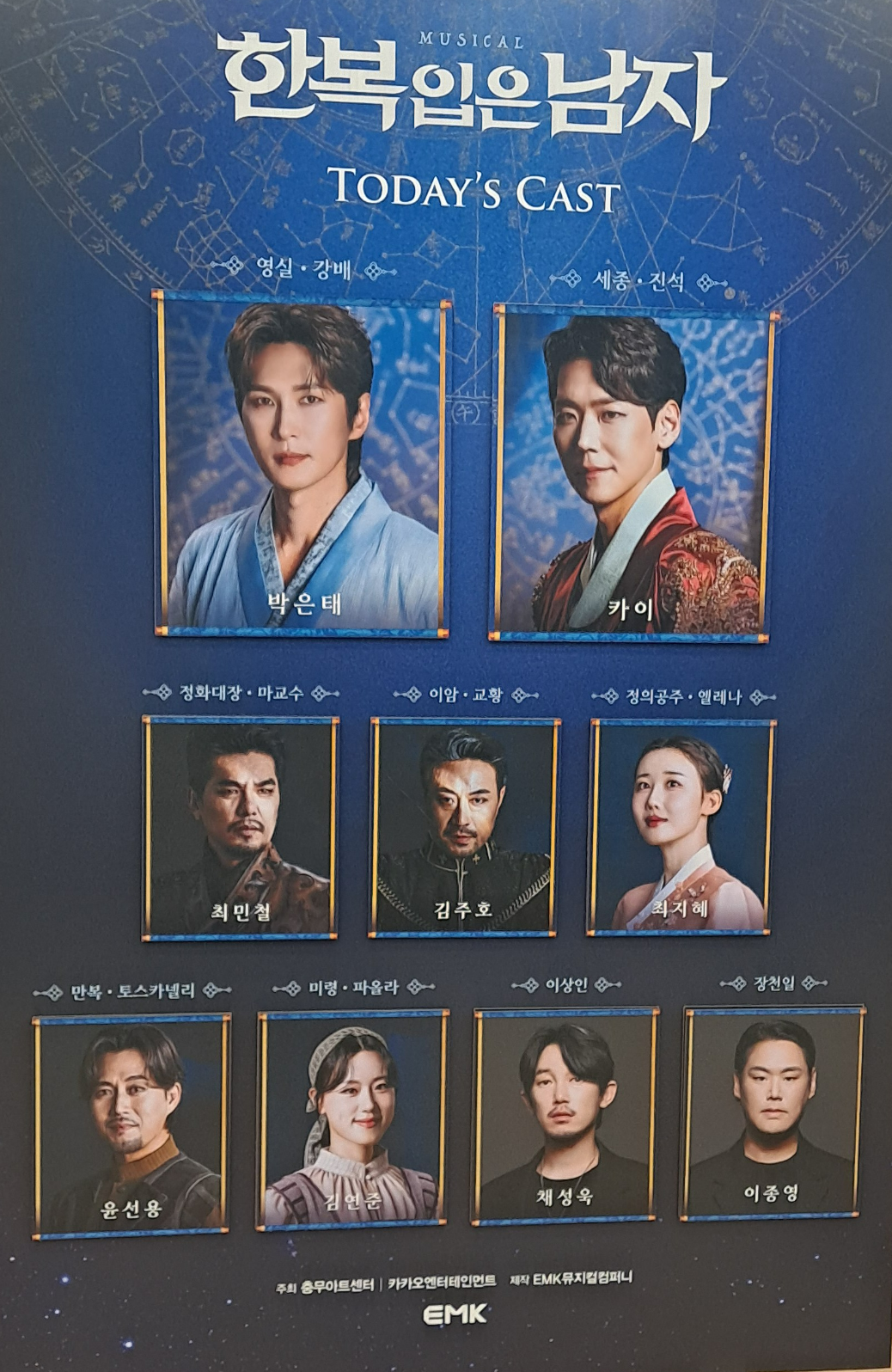
(Act 1: 85 min / Intermission: 20 min / Act 2: 75 min) - Cast (Performance Day)
- Jang Yeong-sil / Kang-bae: Park Eun-tae
- King Sejong / Jin-seok: Kai
- Princess Jeong-ui / Elena: Choi Ji-hye

1. About the Musical & Story Synopsis
The Man in Hanbok is based on the novel of the same name by Lee Sang-hoon.
The musical begins with an imaginative question:
Why did Jang Yeong-sil completely disappear from historical records after 1442?
This mystery is then intertwined with another real historical puzzle —
the 1617 painting “The Man in Hanbok” by Peter Paul Rubens.
From these two unanswered questions, the story expands into a compelling fictional narrative.
In the present day, Jin-seok, a documentary TV producer, investigates Rubens’ mysterious portrait.
During his research, Elena, an Italian student, hands him an old memoir notebook.
Inside are sketches resembling Leonardo da Vinci’s flying machine, designs for the Korean flying device Bicha, drawings similar to Rubens’ works, and detailed records believed to belong to Jang Yeong-sil himself.
As Jin-seok and Kang-bae, an expert in ancient texts and Hangul, decode the notebook,
the audience is taken on a journey across time — tracing the hidden life of Joseon’s greatest scientific mind.
Although Leonardo da Vinci does appear in Act 2, this musical is ultimately a story about Jang Yeong-sil and his life.
2. Review & Impressions
Act 1 — Joseon Dynasty: The Life of Jang Yeong-sil
Act 1 is entirely set in Joseon Korea.
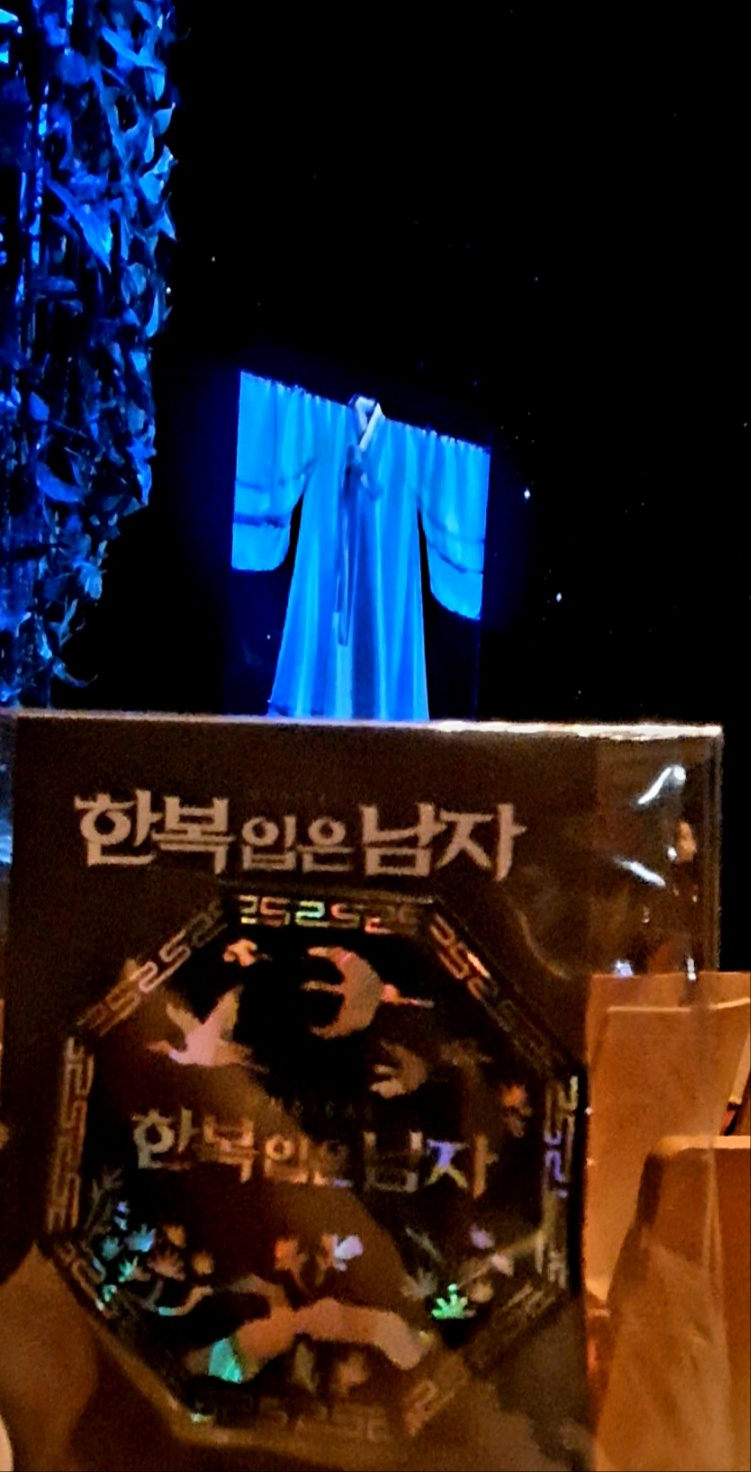
The moment the curtain rises, the meticulously recreated Gyeongbokgung Palace set draws immediate admiration.
The hanbok costumes worn by both the principal cast and ensemble are stunning — elegant, colorful, and historically inspired.
Frequent costume changes and large ensemble scenes emphasize the grand scale of the production.
Jang Yeong-sil, born as a government slave, earns freedom and rank through his exceptional scientific talent.
Yet despite his achievements, he is never fully accepted by the ruling elite — a theme that subtly echoes modern discussions of social class and unequal opportunity.
Musically, the Park Eun-tae × Kai pairing was phenomenal.
Every major number was met with sustained applause, and Park Eun-tae’s extensive solo scenes allowed him to fully embody Yeong-sil’s passion and inner conflict.
Act 2 — Europe: A Genius Far from Home
Act 2 shifts to Europe, opening with an impressive recreation of St. Peter’s Basilica.
Here, Yeong-sil continues his scientific pursuits and encounters a young Leonardo da Vinci — not as a student-teacher relationship, but as a symbolic meeting of Eastern and Western geniuses.
Some elements involving the medieval Catholic Church — indulgences, heresy trials, and papal authority — may feel slightly abrupt.
However, since the emotional core remains firmly centered on Yeong-sil, these moments pass quickly if one focuses on his journey.
The most heartbreaking realization comes when Yeong-sil chooses not to return to Joseon, despite having the chance.
One of the most unforgettable scenes in the entire musical is when Yeong-sil sings “I Miss You”, holding a lantern in Italy.
The warm glow of the lantern spreads across the stage, symbolizing his longing for home — a deeply moving and visually poetic moment.
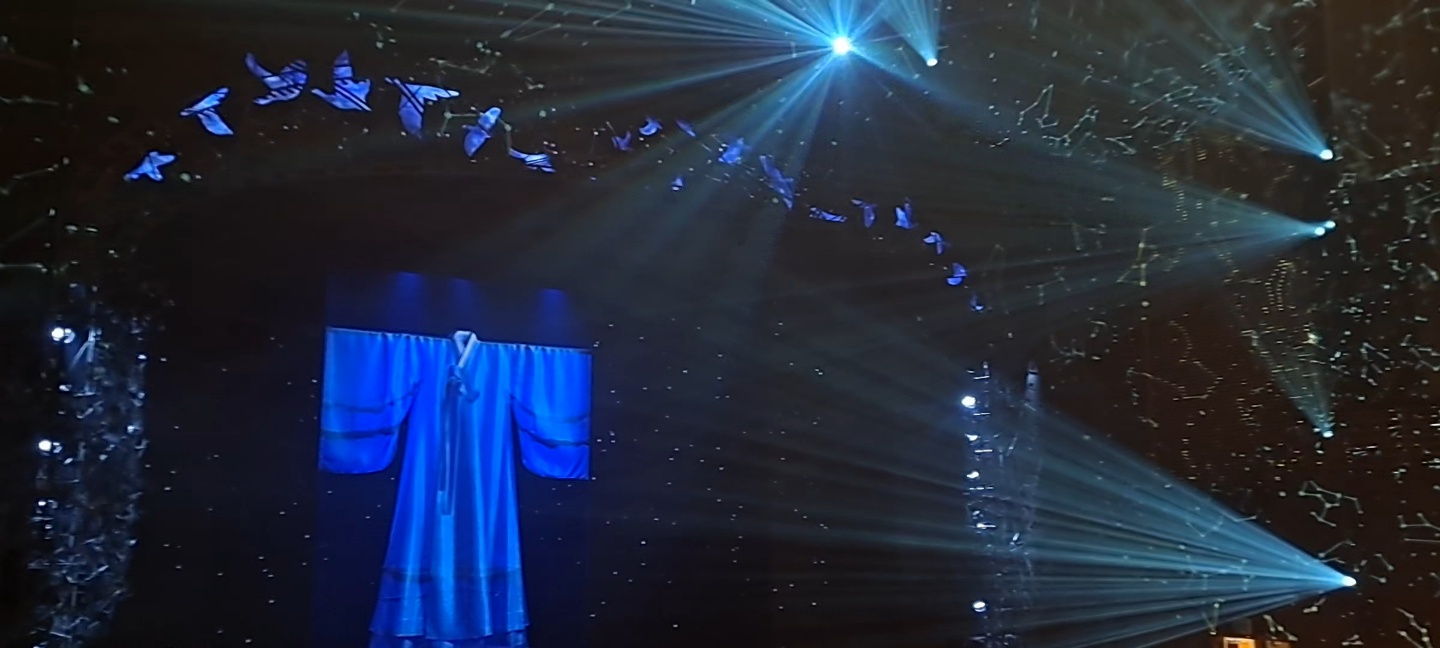
The finale, filled with constellations covering the theater ceiling, transitions seamlessly into the curtain call, leaving the audience in awe.
3. Seating Review — Left Block, Row 4
I was seated in Left Block, Row 4 (side seat).
- Excellent proximity to the stage
- Facial expressions and eye contact were clearly visible
- Park Eun-tae’s character frequently appears on stage left — highly recommended for Yeong-sil fans
- The lack of an orchestra pit makes even Row 4 feel very close
A minor note: due to speaker placement, a few spoken lines were slightly less clear, though all musical numbers sounded excellent.
Personally, I would love to rewatch this musical from the second floor, simply to fully appreciate the entire stage composition — it’s that visually beautiful.
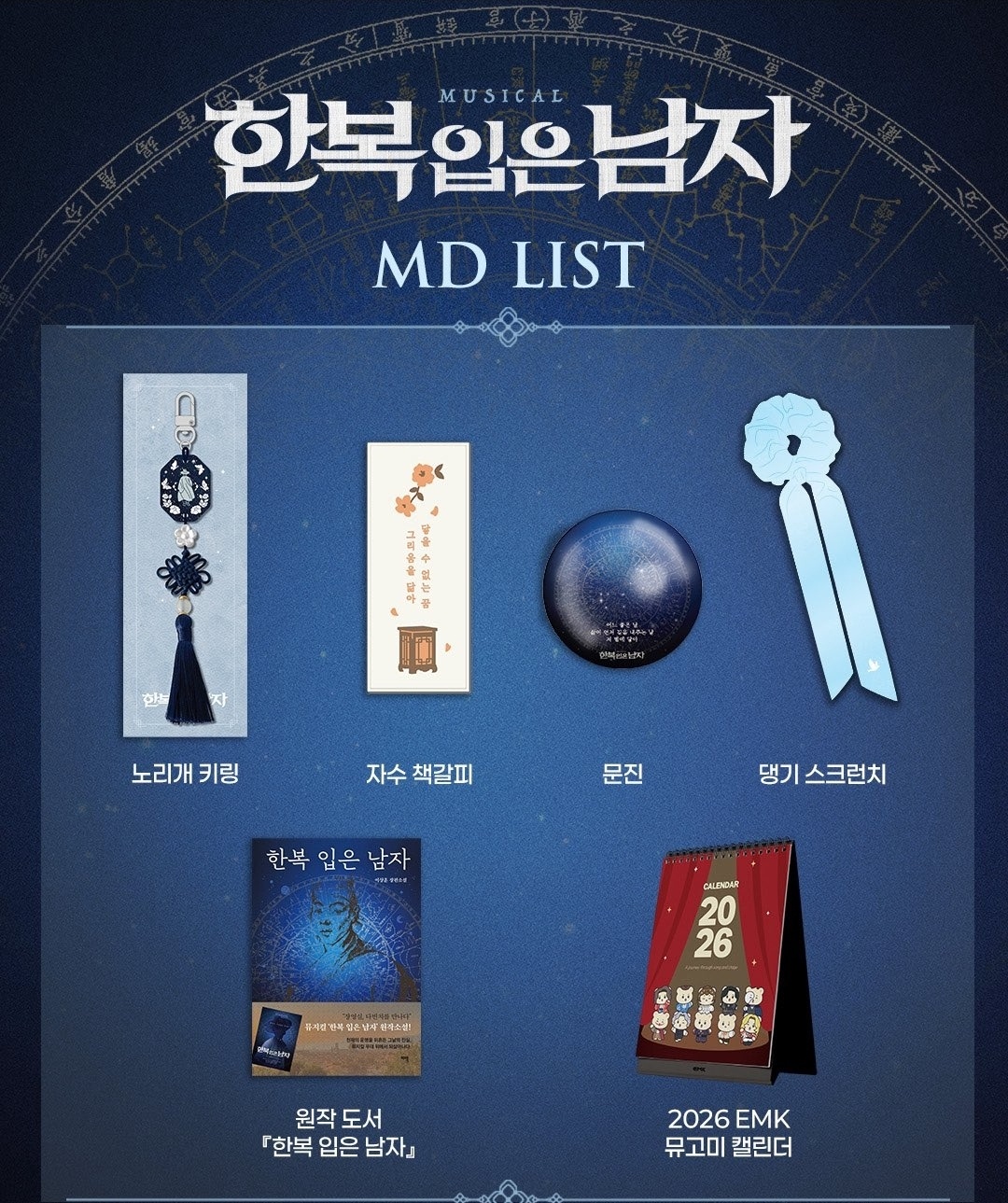
4. Merchandise (MD) Review
There was a wide variety of merchandise available, including:
- Postcards
- Lenticular posters
- Badges & magnets
- Traditional daenggi scrunchies
- Paperweights
- The original novel The Man in Hanbok
The designs strongly reflect Korean aesthetics and intellectual themes, making them perfect souvenirs.
I purchased the daenggi scrunchie and acrylic magnet — the magnet design was especially beautiful (though I secretly wish the scrunchie had been slightly more affordable!).

5. Final Thoughts
With its blend of Korean history, traditional beauty, scientific imagination, and emotional storytelling,
The Man in Hanbok stands out as a remarkably polished original musical — especially impressive for a world premiere.
While some viewers may find the Da Vinci connection slightly unconventional, embracing it as creative imagination allows the story to resonate more deeply.
This is a production that truly represents the potential of K-Musicals on the global stage, and if given the opportunity, I would gladly watch it again.
Maybe Happy Ending: The K-Musical That Won Broadway's Heart
In a near-future Seoul, where abandoned helper robots live quietly among humans, a subtle yet deeply emotional love story unfolds. Maybe Happy Ending, a Korean original musical, follows two robots—Oliver and Claire—who learn to feel, connect, and love
kpop.gracefulfill.com


